


Key takeaways
- Property age cuts in two directions. The building gets older and depreciates. The land underneath usually appreciates, often faster in older suburbs that already have infrastructure, schools and street character.
- Older homes carry hidden bills (asbestos, lead paint, ageing plumbing, dated electrical, roof replacement) that most buyers underestimate. Asbestos alone is in roughly one in three Australian homes built before 1990.
- Australian investors lose access to capital-works depreciation on properties built before 16 September 1987, which materially reduces after-tax returns on un-renovated older homes.
- A recent renovation resets the maths. PropCompare scores newer or recently-renovated homes more favourably because that combination minimises both maintenance risk and depreciation loss for the median buyer.
What "property age" actually tells you
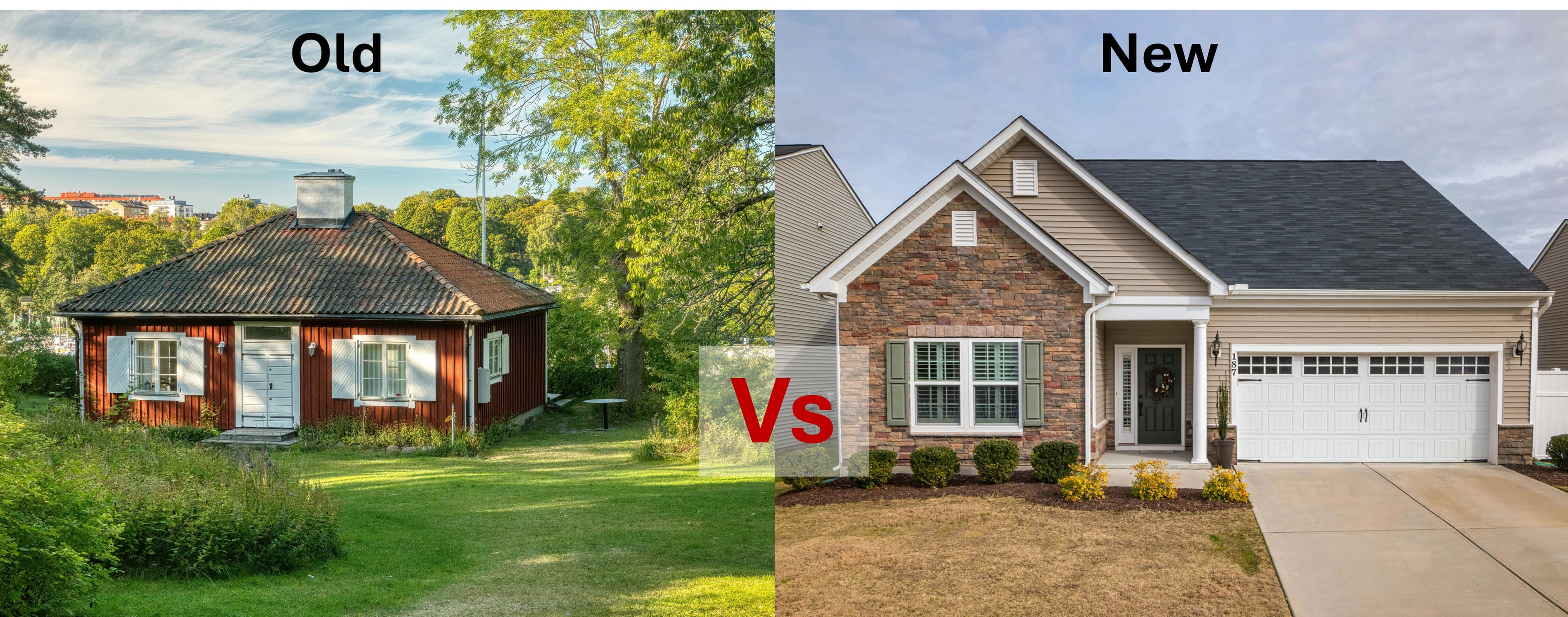
When a buyer says a property is "old", they usually mean the building. When a valuer or a long-hold investor says it, they often mean something more useful: the land.
A property is two assets stacked on top of each other. The building, like any built thing, wears out. Roofs leak, plumbing corrodes, paint flakes, fixtures fall behind code. From the moment a new home is finished it starts losing value as a structure. The Australian Taxation Office encodes this directly in its depreciation rules: a residential building structure is treated as depreciating at 2.5% per year over 40 years.
The land is the opposite story. Land cannot be created. The 700-square-metre block in an inner-ring Sydney suburb today is the same 700 square metres it was when the house on it went up in 1962. What has changed in those decades is the suburb around it: schools, transport, shops, jobs and, most powerfully, the population pressure of the Big 5 Australian capital cities, which capture roughly 90% of national population growth between them. Land in those markets has structural tailwinds.
This is why the same older house can be a wealth-building winner and a cash-flow loser at the same time. The land underneath is dragging the long-term curve up while the building on top drags the short-term cash flow down. The trick to buying well by age is reading both halves at once.
The Australian build-era cheat sheet
Australian housing stock has clear era markers. The era a house was built in tells you a lot about what to expect for materials, layout, lot size and maintenance trajectory.
| Era | What it usually signals |
|---|---|
| Pre-1940 (Federation, interwar) | High character premium in the right suburb. Larger original blocks. Lead paint, knob-and-tube wiring and lath-and-plaster walls almost certainly need attention. Often heritage-protected. |
| 1945 to 1965 (post-war) | Brick veneer or fibro, smaller floor plates than today, generous land. Asbestos very common, electrical wiring near end of life, roofs often replaced once already. |
| 1965 to 1985 | The classic Australian brick-and-tile suburb. Asbestos still present (banned only in 2003). Galvanised steel plumbing reaching the end of its 30 to 60-year service life. Investors do not get capital-works depreciation if built before 16 September 1987. |
| 1985 to 2000 | Modern construction methods, but build quality varies widely. Late 90s often saw cost-cutting. Capital-works depreciation available. Energy efficiency well below current standards. |
| Post-2000 | Smaller lots in most growth areas, often subdivided. Higher base build cost, better insulation, modern wiring and plumbing. Full depreciation eligibility. Limited character premium in established suburbs. |
The era is not destiny. A 1965 brick-and-tile that has been thoughtfully renovated behaves like a much younger home. A poorly-built 1998 house can have more problems than a well-cared-for 1960s home. Use the era as a starting question, not a final answer.
The hidden bills of older homes
The maintenance line is where the older-home pitch quietly falls apart for buyers who did not budget for it.
Source: Asbestos industry guidance for Australian conditions. Asbestos was widely used in roofing, eaves, internal walls and pipe insulation, and was not fully banned in Australia until 2003. Removal typically runs $30 to $100 per square metre with a $2,000+ minimum.
The list of expected expenses on a 50-plus-year-old un-renovated home is long enough to plan for, not panic over. Asbestos remediation if any work disturbs older sheeting or eaves. A full electrical rewire if the home still runs on cloth-insulated wiring or has a fuse box rather than a modern switchboard. A plumbing replacement if the original galvanised steel pipes are still in place (their useful life is 30 to 60 years; pre-1960 systems are well beyond that). A roof replacement, usually in the $20,000 to $30,000 range depending on size and material. Sometimes the original sewer connection. Together these can add $80,000 to $200,000 over the first decade of ownership of an un-renovated older home, before any cosmetic work.
Newer homes do not escape maintenance. Roofs still leak, hot water systems still fail, decks still rot. The difference is that the timing is much more predictable on a younger home, and the bills are far smaller in the first decade.
How investors actually think about age
For investors, age has a tax dimension that owner-occupiers do not have to think about. Australia's is one of the largest non-cash deductions available to a residential investor.
The cutoff is 16 September 1987. Properties built before that date are not eligible for capital-works deductions on the original structure. Substantial renovations completed after July 1985 can still attract a deduction in their own right, which is why a recently-renovated older home can return to investor-grade tax treatment despite its underlying age.
In practical terms, on a $700,000 investment property with a $400,000 building component, eligibility for capital-works depreciation can return roughly $10,000 a year in deductions for 40 years. That is real after-tax cash flow that an un-renovated pre-1987 home simply cannot offer.
Chloe and Ben: same suburb, sixty years apart
Chloe and Ben are looking at two houses in the same outer-Sydney suburb. Chloe's preferred home is a 1962 brick-and-tile on a 700-square-metre block. Ben's is a 2018 build on a 350-square-metre subdivided lot two streets over. Same postcode, same school catchment.
| Chloe (1962, 700m²) | Ben (2018, 350m²) | |
|---|---|---|
| Listing price guide | $1,250,000 | $1,180,000 |
| Land value (estimated) | $1,000,000+ | ~ $580,000 |
| Building condition | Original kitchen, dated bathroom, asbestos eaves | Modern, on builder's warranty |
| Likely 10-year maintenance bill | $80K to $200K (rewire, replumb, roof, asbestos) | $10K to $25K (typical settling) |
| Capital-works depreciation (if rented) | Not available on the original 1962 structure | Full eligibility, ~$10K/year for 40 years |
| Long-term capital growth driver | Land-led; the block is the asset | Building-led; the asset depreciates with use |
The 1962 home looks more expensive on day one. It is also sitting on materially more land, in a suburb where land is doing the long-term work. The 2018 home is easier to live in immediately and easier to rent without surprises, but its building component is depreciating from the moment Ben moves in. Over a 20-year hold, the gap between Chloe's land-led growth and Ben's building-led decline can run into hundreds of thousands of dollars, even after Chloe absorbs her maintenance bill. The reverse can also be true if Chloe's renovation budget is bigger than expected, or if Ben's smaller block sits in a hotter pocket of the suburb.
Beyond the price tag
Three angles the headline price does not capture.
1. The maintenance trajectory
A 1960s un-renovated home has a backloaded cost curve: cheap in the first year of ownership, expensive in years three to ten as systems reach end of life. A 2020s home has a flatter curve. Match the curve to your circumstances. Buyers planning a long hold can absorb the older-home back end. Buyers planning a five-year sale often cannot.
2. Energy efficiency
Older homes leak heat in winter and trap it in summer. Insulation standards changed materially in 2003 (BCA 2003) and again in 2022. A 1965 brick-and-tile typically runs heating and cooling bills two to three times higher than a comparable post-2010 home. With Australian electricity prices unlikely to fall, the gap compounds.
3. The renovation reset
A substantial renovation does two things at once. It restores the building's useful life (the practical reason buyers do it) and, if completed after July 1985, it creates a fresh capital-works deduction in its own right (the investor reason buyers do it). A well-documented post-2010 renovation on a 1960s home can put the property in a similar tax position to a 2010s build, while keeping the land advantage that the older suburb confers.
Common misconceptions
- "New is always better." Not for capital growth in established markets. Land does the long-term work and older suburbs typically have the better land.
- "The 1987 depreciation cutoff applies to the whole property." It applies to the original construction. Substantial renovations completed after July 1985 are independently eligible, even on an older home.
- "All older homes have asbestos." Roughly one in three pre-1990 Australian homes do. A pre-purchase building inspection can identify it. Removal is a known cost, not a deal-breaker.
- "A recent renovation makes maintenance disappear." A renovation resets the clock on what was renovated. The roof, the foundations, the original sewer line and any unrenovated rooms still age on their original timeline.
- "I can claim depreciation on land." No. Land does not depreciate for tax purposes. Only the building structure and qualifying assets do.
Frequently asked questions
Related reading
 Critical property factor
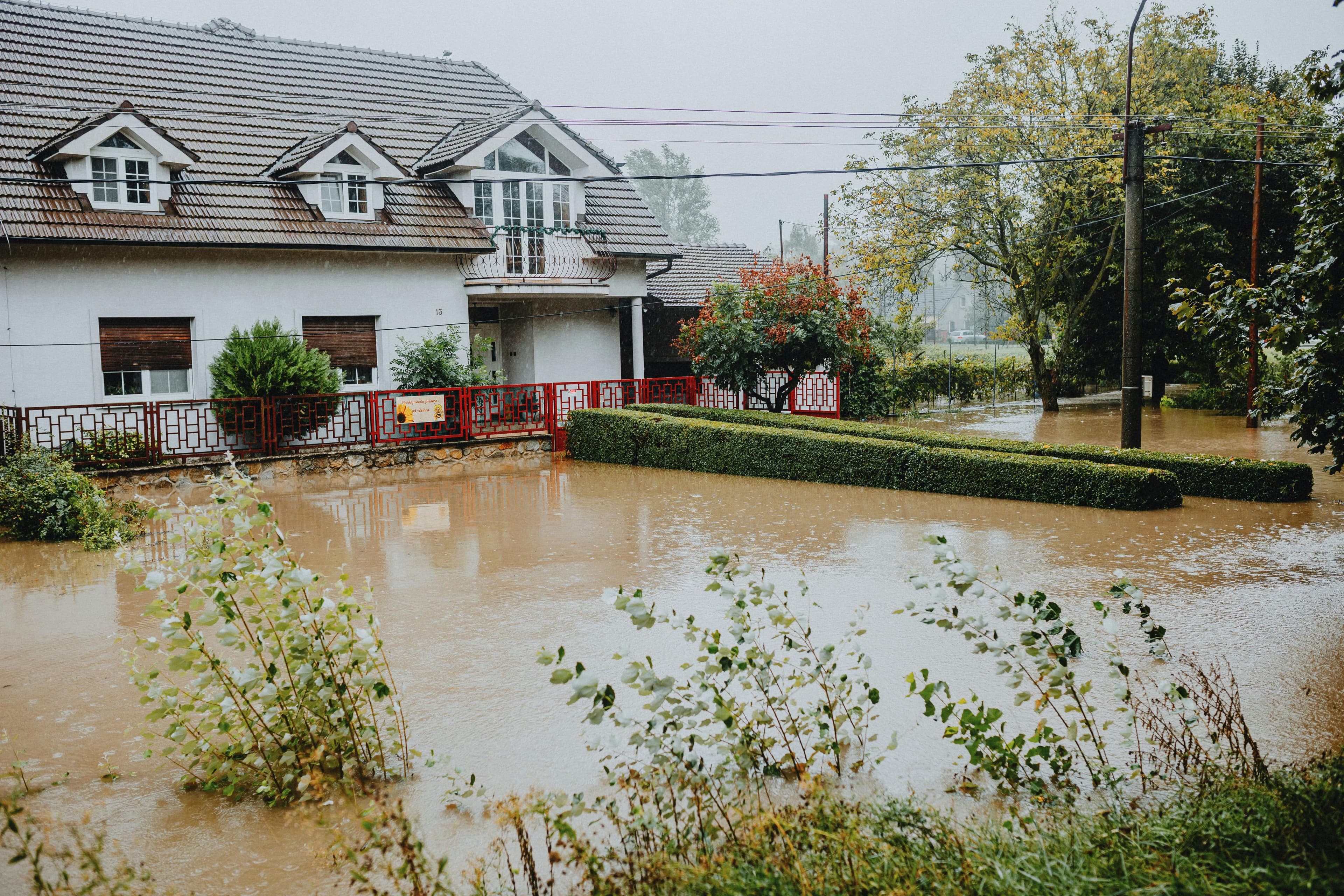
Flood zones in Australia: what every property buyer should know
Flood-zone homes trade at around an 8.5% discount and lag the market for years. Here is what every Australian buyer should weigh before making an offer.
 Critical property factor
Why bushfire-zone homes trade at a premium, until they don't
Building a home to BAL-29 can add $30,000 to the price. The full picture of what bushfire-zone living costs Australian buyers, from construction to insurance to resale.
 Important property factor
How much is a north-facing house actually worth?
Australian buyers paid an average of $375,500 more for north-facing homes in 2025. And 'north-facing' does not mean what most first-time buyers assume.