


Key takeaways
- A flood zone is an area government mapping says will be reached by floodwater in a defined storm event. It is a physical fact about the land, not an opinion.
- "Flood zone" and "flood overlay" usually mean the same thing in practice. Overlay is the planning-document term, zone is the everyday word.
- Properties in flood-affected areas trade at around an 8.5% discount on average, and underperform flood-free comparables by close to half a percentage point per year over 15 years (PropTrack, 2025).
- The hidden costs are bigger than the headline price discount. Insurance premiums can run several thousand dollars a year higher, lenders may apply stricter conditions, and your future buyer pool is smaller.
- You cannot inspect for flood risk on a Saturday open. It needs to be checked against official flood maps before you make an offer.
What is a flood zone (and a flood overlay)?
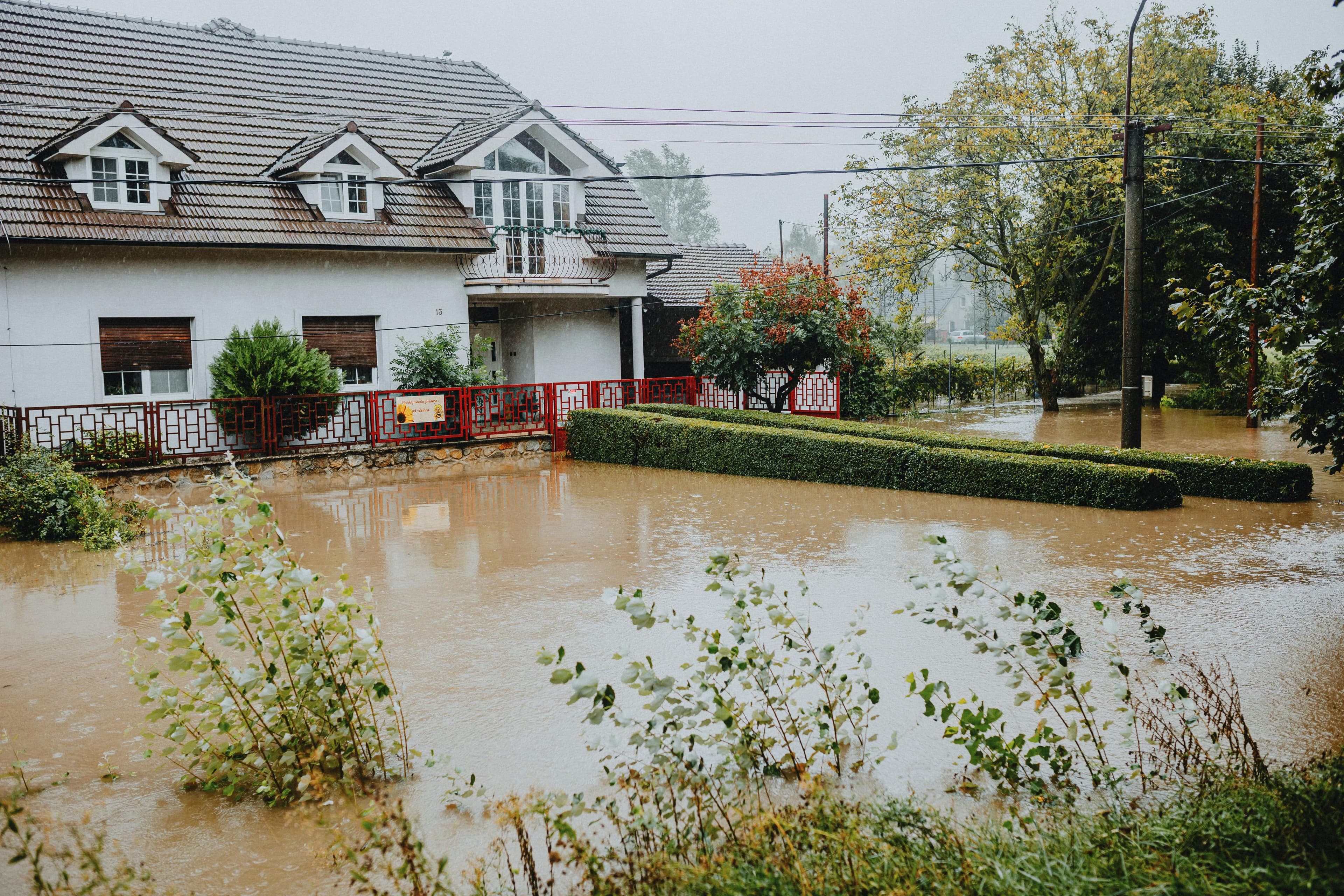
A flood zone is a section of land that government modelling says will be covered by water during a flood of a defined size. The mapping is based on hydrology, terrain, drainage, and historical events. Each Australian state runs its own mapping, but they all describe the same physical reality: water has somewhere it wants to go, and these are the places it goes when there is too much of it.
You will hear two terms used almost interchangeably:
- Flood zone is the everyday word. When friends, agents and most articles say "this house is in a flood zone", they mean it sits within a government-mapped flood-prone area.
- Flood overlay is the technical term that appears on planning instruments and council certificates. An overlay is a layer painted on top of the base zoning to flag a specific issue (in this case, flood risk).
In most everyday situations the two terms point to the same piece of information. We use them as synonyms throughout this article. Where the difference matters (for example, on a contract or a planning certificate) we will say so explicitly.
The most common reference event you will see on a planning certificate is the . That is the benchmark most state and council overlays are built around. Some states layer on a as well, especially near dams and rivers.
A subtlety worth holding in mind: an overlay covers a parcel of land, not an individual building. Parts of the same block can sit at different elevations, the floor of the house may be lifted above the design level, and the access road might flood before the dwelling does. So when you read a flood report, read it slowly. The land can be in a flood overlay even if the dwelling itself is technically habitable during the design event.
The real cost of being in a flood zone
The property market tends to price flood risk in. Sometimes loudly, sometimes quietly.
Source: PropTrack Flood Risk Analysis, 2025. The discount is the median gap between sale prices in flood-affected areas and comparable nearby properties without a flood overlay.
A discount of that size on a $900,000 home is roughly $76,000 of value the market is quietly removing from the asking price before the listing even goes up. And that is just the entry point. The same PropTrack analysis tracked the longer-term capital growth of flood-affected versus flood-free properties and found the underperformance kept compounding over time.
In rough numbers, on a $1,000,000 property held for fifteen years, a flood-exposed equivalent could end up several hundred thousand dollars behind. Not because flood-affected homes "go down", but because they go up more slowly while the rest of the market keeps climbing. That spread is what investors call .
It is worth noting that none of these numbers describe a single property. They describe averages across thousands of sales. A specific home in a flood overlay might do better or worse depending on its features, its street, and how the broader suburb is travelling. But the gravitational pull of flood risk on price is real, and it is consistent across decades of Australian data.
Meet Sarah and Tom: same house, two streets apart
Sarah and Tom are looking at two near-identical homes in an outer-suburb pocket of Brisbane. Same builder, same era, same floor plan, same school catchment. The only meaningful difference is that one block sits on the lower side of a creek line and the other sits on the higher side. Sarah is leaning toward the higher block, which is clear of the flood overlay. Tom is drawn to the lower block, which sits inside the overlay and is being marketed at a noticeable discount.
This is a deliberately simplified example. Real properties differ in ways that distort the comparison. The point is to make the size of the gap visible.
| Sarah (outside the overlay) | Tom (inside the overlay) | |
|---|---|---|
| Purchase price today | $900,000 | $823,000 (about 8.5% lower) |
| Annual home insurance (typical) | $1,800 to $2,400 | $5,000 to $9,000+ |
| Bank willingness to lend at full LVR | Standard terms | Stricter conditions, sometimes lower max LVR |
| Estimated value in 15 years | ~ $1,840,000 | ~ $1,520,000 |
| Cumulative extra insurance over 15 years | n/a | $48,000 to $99,000 |
| Buyer pool when you sell | Broad | Narrower; some buyers will not consider flood-affected stock at all |
The headline saving on day one looks attractive to Tom. But once the higher insurance, the slower capital growth and the resale friction stack up, his cheaper property often turns out to be the more expensive choice over a long holding period. Sarah and Tom would not feel any of that on a Saturday inspection. They would feel it gradually, over years, in their bank statements and at the end when they go to sell.
Beyond the price tag
The financial numbers are the easiest part to talk about. The lived experience is where flood-zone homes really separate from flood-free ones. Three angles worth thinking about before you make an offer.
1. Insurance and excess
The Insurance Council of Australia has been raising the alarm for several years on flood premiums. Properties in high-flood-risk areas can be quoted thousands of dollars per year more than equivalent homes nearby, and excesses on flood-related claims are often several thousand dollars on top. In some pockets, getting cover at all has become difficult. Insurance is not just a recurring cost. It is a signal: the most data-rich operators in the country, looking at the same maps you can look at, are pricing the risk.
2. Daily life and stress
A flood event does not need to reach the house to affect the household. Access roads going under in a major rain event mean kids cannot get to school and parents cannot get to work. Garages, sheds and underfloor spaces flood long before living rooms do. Even after the water recedes, there is mud, mould, smell, and weeks of cleanup. Long-term residents of flood-affected suburbs talk about it as a kind of low-grade tax on the year.
3. The buyer pool when you sell
When you go to sell, you are competing for the smallest pool of buyers your property has ever faced. A meaningful share of the market simply will not consider a property with a flood overlay, especially after high-profile events like the 2022 Brisbane floods or the catastrophic Lismore floods of the same year. That smaller pool means more time on market, more price negotiation, and more pressure on you as the vendor.
Common misconceptions
Buyers often arrive at flood risk with a few ideas that are worth revisiting before the decision gets made.
- "It has not flooded in twenty years, so it is fine." Flood mapping is built on physics, not anecdotes. A 1-in-100-year flood has a one percent chance every year. Twenty quiet years tell you almost nothing about the next twenty.
- "The house has been raised, so the flood overlay does not matter." A raised dwelling helps protect the structure. It does not help the access road, the garage, the garden, the pool, or the fence. It also does not help the resale price; valuers and most buyers still see the overlay first.
- "It will be cheaper, and we are happy to take the risk." That is a valid choice for some buyers. But the discount is often smaller than the cumulative cost of insurance plus slower capital growth over a long hold. Run the numbers carefully before relying on this argument.
- "Insurance will cover us." Insurance covers the cost of a claim, eventually. It does not cover the months of disruption, the temporary accommodation, the lost belongings of sentimental value, or the slow erosion of resale appeal.
- "The agent said it is not in a flood zone." Agents are not the source of truth on planning overlays. Council planning certificates and state flood mapping are. Consider checking the official mapping yourself or having your conveyancer verify it before you sign anything.