


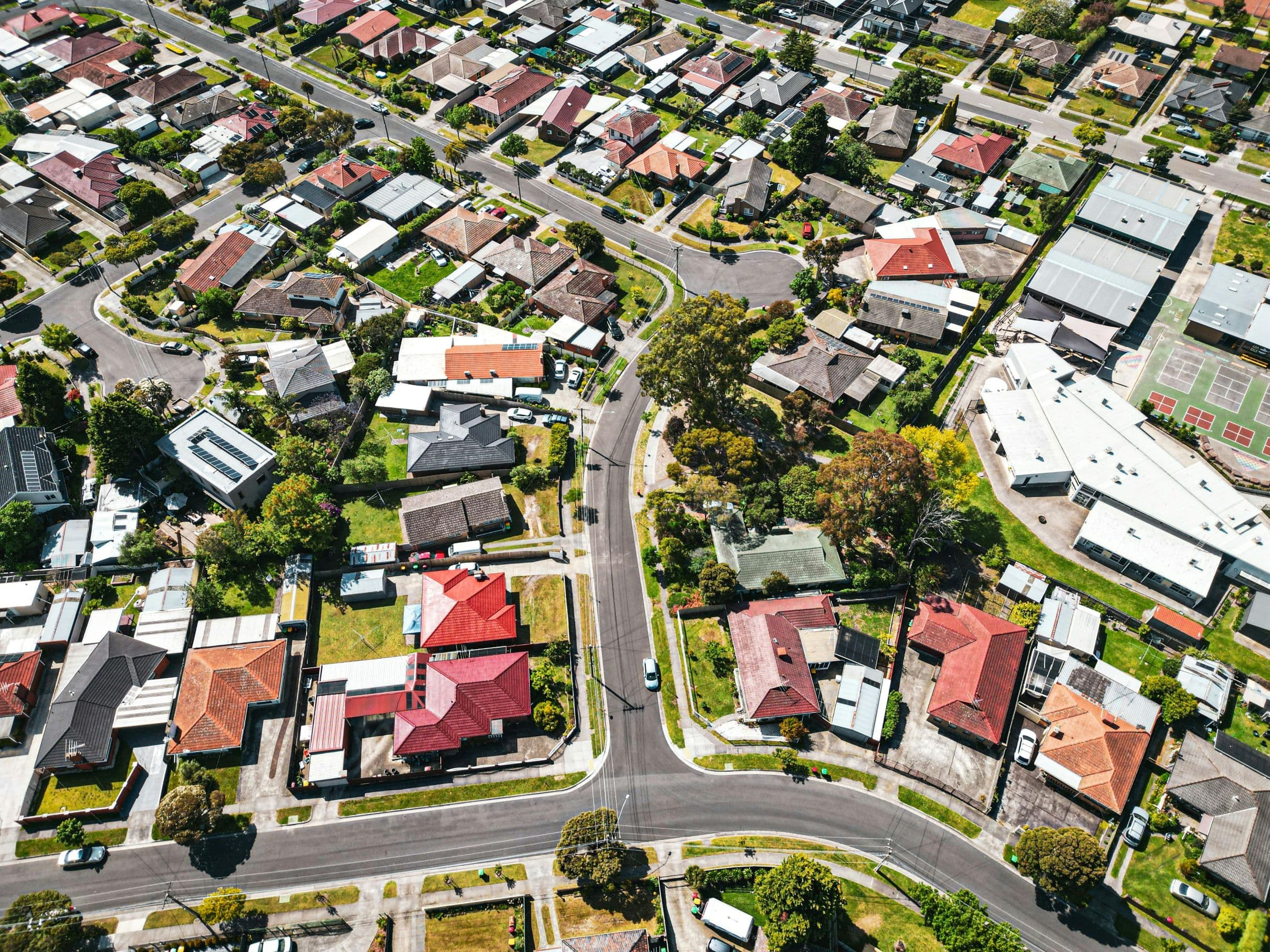
Key takeaways
- Council zoning controls what can be built on your block and on the blocks around you. It is the single biggest legal driver of street character, density and long-term value.
- Every Australian state uses its own zoning language. NSW uses R-numbers, Victoria uses three-letter codes (GRZ, NRZ, RGZ), Queensland uses LDR/LMR/MDR, Western Australia uses R-codes that look like NSW but mean something completely different.
- The two questions that matter for a buyer: what is the zoning of this property, and what is the zoning of the streets around it? Higher-density neighbours can change your traffic, sunlight, privacy and resale buyer pool.
- PropCompare normalises every state's zoning code into a simple Low, Medium or High classification when you analyse an address, so you can compare like-for-like across cities and states.
What "council zoning" actually means
A zone is the land-use category your council and state planning instruments place on a block. It controls three things at once:
- What you can build. A single house, a duplex, a townhouse, a small apartment block, or a high-rise. Each zone has a list of permitted, conditional and prohibited uses.
- How big you can build it. Maximum heights, storeys, lot coverage, garden area requirements and setbacks all flow from the zone.
- What your neighbours can build. The zoning of nearby blocks shapes how the street will evolve. A quiet detached-house street with a medium-density zone two doors down looks very different in ten years.
Zoning lives on the council planning certificate (called a Section 10.7 in NSW, Form 6 in QLD, equivalent named instruments in other states). Your conveyancer pulls this as standard during a contract review. PropCompare returns the zoning automatically when you analyse an address, so you can read the picture before you make an offer.
The reason zoning is one of the in a property analysis is that it does not move quickly, but when it does move it moves a lot. A rezoning event in your suburb can lift or sink values overnight, while standard zoning sets the long-term character that values track over decades.
The terminology problem
Australian planning is a state-by-state system. Each state writes its own statewide framework, and individual councils plug into that framework with their own local environmental plan or planning scheme. The result is six different zoning languages that all describe broadly the same thing.
A buyer crossing borders, or even comparing a Sydney listing to a Brisbane listing, has to translate. R2 in NSW does not mean what R20 means in Western Australia. NRZ in Victoria does not have an obvious counterpart anywhere else. The codes look technical, and they can be, but the underlying buyer question is simple: how dense is the neighbourhood I am buying into, and which way is it heading?
Six states, six zoning languages
This is the working translation. Each state has more zones than the residential ones listed here (rural, commercial, industrial, special-use, environmental). For a typical residential buyer, the zones below are the ones you will actually run into.
| State | Low density (mostly detached homes) | Medium density (townhouses, small apartments) | Higher density (mid-rise apartments) |
|---|---|---|---|
| NSW | R2 Low Density Residential | R3 Medium Density Residential | R4 High Density Residential |
| VIC | NRZ (Neighbourhood Residential Zone), 9m / 2 storey | GRZ (General Residential Zone), 11m / 3 storey | RGZ (Residential Growth Zone), 13.5m / 4 storey |
| QLD | LDR (Low Density Residential) | LMR (Low-Medium Density Residential) | MDR / HDR (Medium / High Density Residential) |
| WA | R5 to R20 R-Codes (R20 is the most common suburban band) | R25 to R40 R-Codes (townhouses, smaller-lot duplex) | R60+ R-Codes (apartments, mid-rise) |
| SA | Suburban Neighbourhood Zone, Hills Neighbourhood Zone | Master Planned Neighbourhood Zone, Mixed-Use Zone | Urban Corridor Zone |
| TAS | Low Density Residential Zone, Rural Living Zone | General Residential Zone | Inner Residential Zone |
You can verify the zoning of any specific address through the relevant state planning portal:
| State | Where to look up the zoning of an address |
|---|---|
| NSW | NSW Planning Portal |
| VIC | VicPlan (Department of Transport and Planning) |
| QLD | Queensland Planning zoning information (then your local council) |
| WA | Department of Planning, Lands and Heritage (R-Codes set under the WAPC) |
| SA | PlanSA (Planning and Design Code) |
| TAS | LISTmap Tasmania |
How does PropCompare help you decode the confusion?
Six languages is unworkable for a buyer trying to compare properties across cities. PropCompare normalises every state's zoning code into a simple three-band classification:
- Low Density (NSW R2, VIC NRZ, QLD LDR, WA R5-R20, SA Suburban Neighbourhood, TAS Low Density Residential)
- Medium Density (NSW R3, VIC GRZ, QLD LMR, WA R25-R40, SA Master Planned, TAS General Residential)
- High Density (NSW R4, VIC RGZ and MUZ, QLD MDR/HDR, WA R60+, SA Urban Corridor, TAS Inner Residential)
Our default analysis scores Low Density most favourably for owner-occupier buyers. The rationale is straightforward: low-density zoning protects the established neighbourhood character, keeps traffic and overshadowing pressures in check, and produces the broadest resale buyer pool. That is what suits the median Australian buyer. Investors who specifically want a development play (granny flat, duplex, small townhouse build) often prefer medium density and PropCompare flags that zoning honestly so investors can decide for themselves.
We also surface the original state-specific zone code on the property page, in case you want to verify it on your council planning certificate or talk to a planner.
Hannah and David: same suburb, opposite sides of a line
Hannah and David are looking at two near-identical brick houses in an inner-Sydney suburb. The houses are two streets apart. Hannah's preferred house is in the middle of a stable R2 (Low Density Residential) pocket. David's is on the boundary of an R3 (Medium Density Residential) zone, with a four-unit townhouse development already approved across the road.
| Hannah (R2 pocket) | David (R2 on R3 boundary) | |
|---|---|---|
| Listing price guide | $1,420,000 | $1,330,000 |
| What can be built next door | Detached house, dual occupancy | Up to four-storey townhouses or low-rise apartments |
| 10-year street character outlook | Stable; broadly the same homes | Medium-density redevelopment likely along the boundary |
| Likely traffic and parking pressure | Low; existing residents only | Higher; unit blocks bring more cars and visitors |
| Resale buyer pool | Broad; suits family owner-occupiers | Narrower for owner-occupiers, wider for developer buyers |
| Capital growth dynamic | Tracks the suburb baseline | Can outperform if a developer assembles the block, lag if the boundary just brings density without a sale opportunity |
David's house is the cheaper buy on day one. The zoning boundary is doing the discounting, not the house itself. Whether the trade-off pays off depends on what David plans to do. If he intends to live there for fifteen years and watch the street redevelop, his quality of life will steadily change. If he intends to sit on the block in case a developer assembles his row for a townhouse project, the boundary is potentially the entire point. Hannah's house has a quieter long-term curve.
The rezoning question
Zoning is not permanent. Councils and state governments regularly review and amend zones, sometimes through small "spot rezonings" that affect a few blocks, sometimes through statewide reforms that affect tens of thousands. The 2025 NSW Low and Mid-Rise Housing Policy is a recent example: the state expanded the types of housing permitted in many R2 zones near transport hubs, on the same blocks that previously allowed only detached houses. The change happens through the planning instrument, not through any individual buyer or seller.
For a buyer this matters in two directions:
- Upward potential: if your block is rezoned to a higher density, the development upside transfers to the next purchaser, even if you never build anything yourself. That is how spot rezonings produce overnight value lifts.
- Downward exposure: if the council density-zones the streets around you, the character of your suburb shifts whether your block is rezoned or not. The risk lives in the neighbours' titles, not yours.
A buyer with a long horizon should know what is in the local council's planning strategy or housing strategy document. A simple read of recent council resolutions or a conversation with your buyer's agent can flag whether the suburb is in active review.
Common misconceptions
- "Zoning only matters if I am building." Wrong. Zoning shapes what your neighbours can build. The R3 zone two streets over will bring townhouse traffic past your front door whether you ever pour a slab or not.
- "R2 is the same in NSW and Western Australia." No. NSW R2 is a low-density zone label. WA R20 is a density code that means around 450 m² per dwelling, which is standard suburban density. The naming overlap is the most common source of cross-state confusion.
- "All medium-density zones allow apartments." No. Some medium-density zones (NSW R3, VIC GRZ) cap height at three storeys and prefer townhouses or smaller infill formats. True apartment zones are typically the next band up (R4, RGZ, MDR).
- "The agent said it cannot be subdivided, so the zoning does not matter." Subdivision is one outcome of zoning. Permitted use, height, garden area, lot coverage and setback are others. All of them shape long-term value, even when subdivision is off the table.
- "Zones never change." They do. Statewide reforms (NSW Low and Mid-Rise Housing Policy 2025, Victoria's residential zone reforms) and individual council strategy plans regularly redraw the lines. Always check the current zoning, not the zoning from a five-year-old article.
Frequently asked questions
Related reading
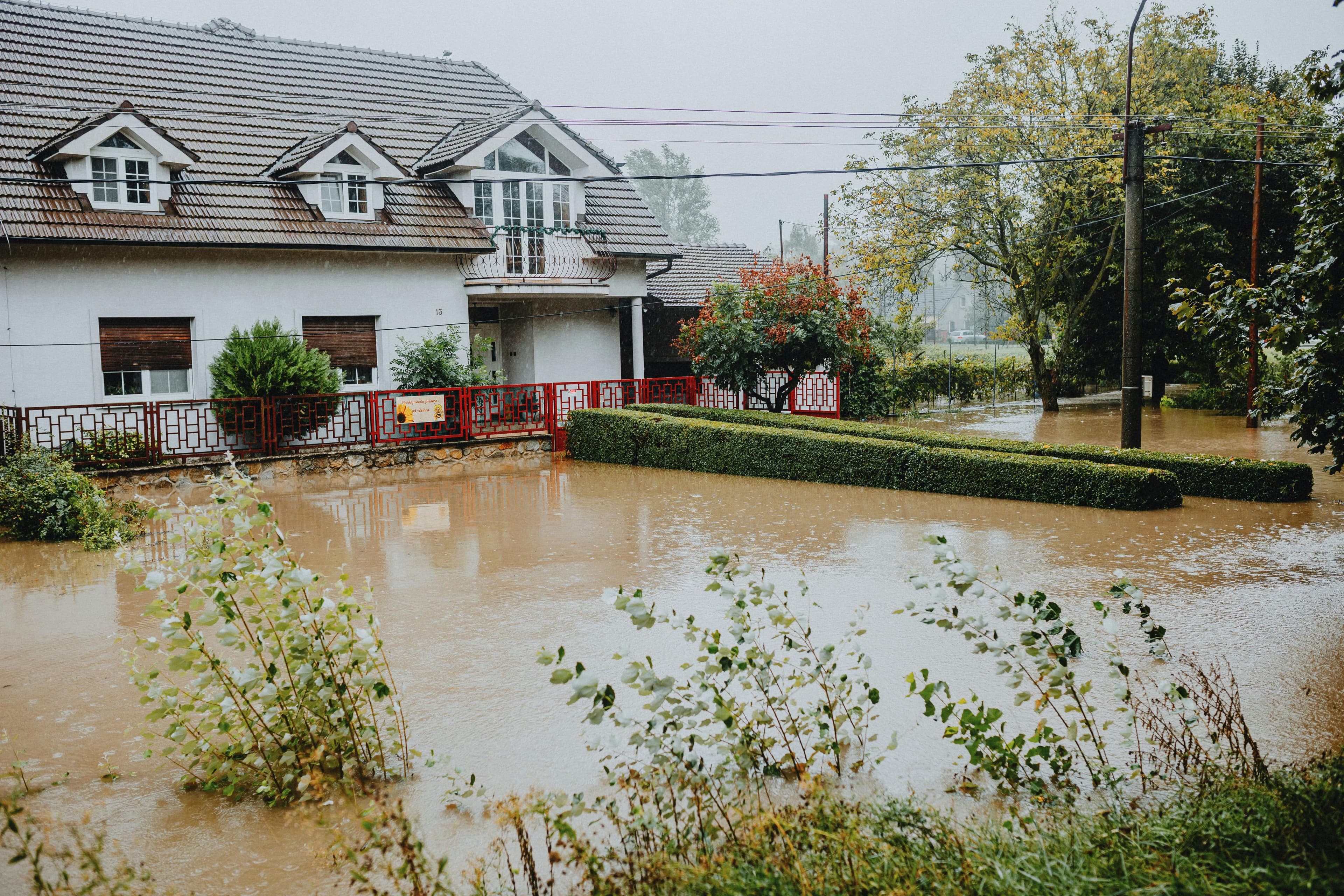 Critical property factor
Flood zones in Australia: what every property buyer should know
Flood-zone homes trade at around an 8.5% discount and lag the market for years. Here is what every Australian buyer should weigh before making an offer.
 Critical property factor
Why bushfire-zone homes trade at a premium, until they don't
Building a home to BAL-29 can add $30,000 to the price. The full picture of what bushfire-zone living costs Australian buyers, from construction to insurance to resale.
 Important property factor
How much is a north-facing house actually worth?
Australian buyers paid an average of $375,500 more for north-facing homes in 2025. And 'north-facing' does not mean what most first-time buyers assume.